

Does homeowners insurance cover hail damage to a roof in Texas?
Usually, yes. A standard Texas homeowners policy covers sudden damage from hail and wind, paid out less your deductible. Wear, age and poor maintenance are not covered, and many Texas policies carry a separate percentage deductible for wind and hail.
Hail is a covered peril; old age is not
Homeowners policies are written around sudden, accidental loss. A storm that bruises shingles and dents the vents is exactly that, so the damage it caused is covered. A roof that is simply worn out after twenty summers is not, even if it leaks.
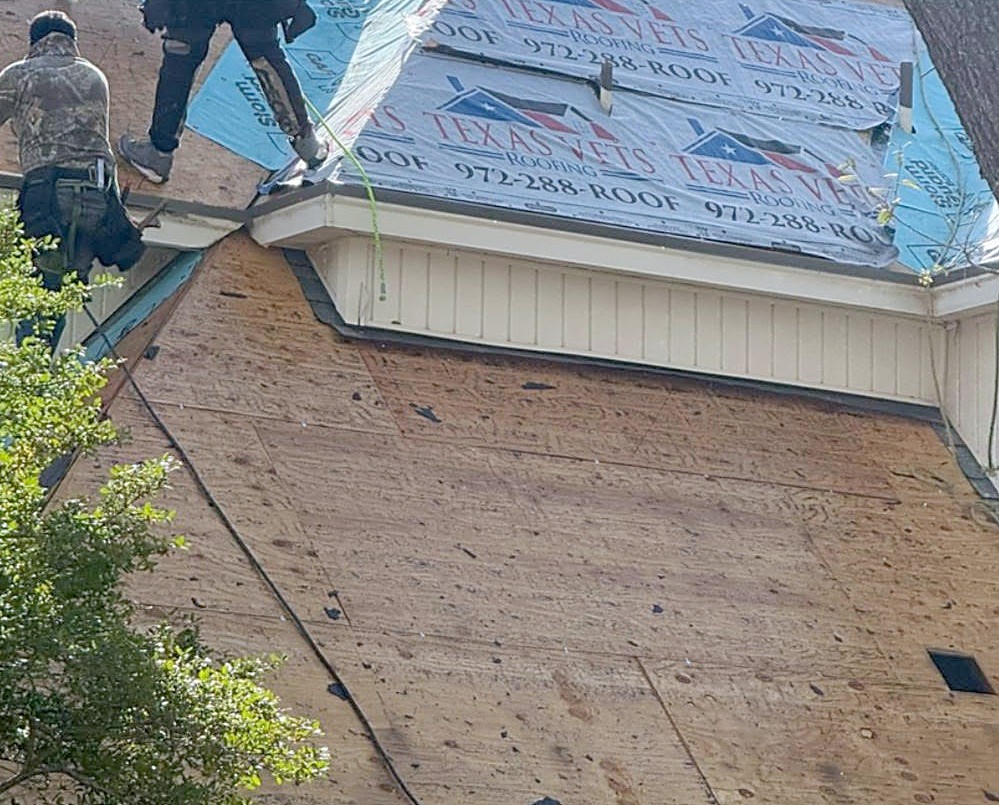
That distinction is why the inspection matters. An adjuster is deciding whether what they see was caused by a particular storm, and photos of fresh hits, dented soft metals and damage to other parts of the house are what show it was.
Wind and hail deductibles are often a percentage
Many Texas policies set the wind and hail deductible as a percentage of the dwelling coverage rather than a flat figure. At 1% on a house insured for $350,000, the deductible is $3,500. At 2% it is $7,000.
Your declarations page shows which one you have. It is worth knowing before a storm, because it decides whether a small amount of damage is worth claiming at all.
Texas law requires the homeowner to pay the deductible. A contractor who offers to waive it, absorb it or hide it in the price is breaking that law, and it can put your claim at risk.
Replacement cost or actual cash value
A replacement cost policy pays what it costs to put on a comparable new roof. Carriers often pay it in two cheques: the actual cash value first, which is the roof’s value after depreciation, and the depreciation withheld until the work is done and invoiced.
An actual cash value policy pays only the depreciated value, which on an older roof can be a small fraction of the cost of a new one. Some policies switch to actual cash value once the roof reaches a certain age. Check the roof section of your policy.
Deadlines are set by the policy
Most Texas policies require a claim within a set period after the storm, commonly one or two years. Damage that was not reported in time can be denied regardless of how clear it is, so a roof that went through a known hail storm is worth inspecting soon after, even if nothing is leaking.
Related questions
Will my premium go up after a hail claim?
Weather claims are usually treated differently from claims for damage you caused, but carriers rate differently. Ask your agent how yours handles a single weather claim.
Are gutters and vents covered too?
When the same storm damaged them, they are normally part of the same claim, along with window screens, fences and other exterior damage.
