

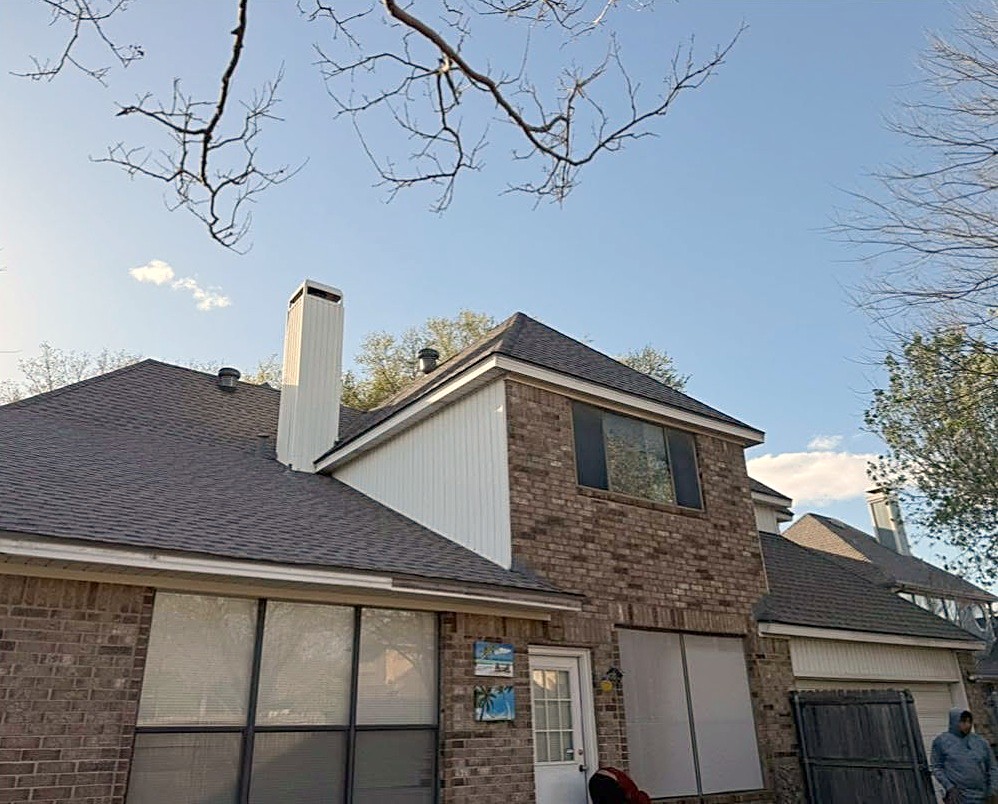
Should I repair or replace my roof?
Repair it when the damage is limited to one area and the rest of the roof has years left. Replace it when damage is spread over several slopes, the shingles are brittle or bare, the roof has been patched repeatedly, or hail has hit the whole roof and a claim will pay for a new one.
Age sets the starting point
Architectural asphalt shingles in North Texas commonly last somewhere around fifteen to twenty-five years, and less on slopes that take the full afternoon sun. A roof in its first decade is almost always worth repairing. A roof past twenty is often worth replacing even when the damage looks small, because the next repair is not far behind.
How widespread the damage is
A few shingles torn off one slope in a wind storm is a textbook repair. The same number of missing shingles scattered across every side of the roof points to shingles that have lost their seal, and more will follow in the next storm.
Hail is different again. It rarely hits one slope, so hail damage is usually a whole-roof problem, and it is usually the thing a claim pays to replace.
Matching and appearance
Shingle lines are discontinued and colours fade, so a repair on an older roof can leave a visible patch. On a house you plan to sell, that patch can cost more in the sale than it saved in the repair.
What is under the shingles
Soft decking, rot around a chimney or a roof that has had several layers put on over the years all push the answer toward replacement. None of that is visible from the street, which is why the decision belongs after an inspection rather than before one.
Related questions
Can new shingles go over the old ones?
Building codes generally allow two layers, but a second layer hides the decking, adds weight and can shorten the life of the new shingles. A full tear-off is the better job on most houses.
Is a repair a waste of money on an old roof?
Not when it keeps the house dry while you plan a replacement. It stops being good value once repairs come every season.
